

Screen Printing vs Embroidery vs DTF: What Decision-Makers Need to Know
- Eric Grubb
- Feb 4
- 5 min read

You're not here because you're fascinated by printing technology. You're here because you need to order apparel: for your school, church, business, or team: and you don't want to make the wrong call.
The printing method you choose affects how your apparel looks, how long it lasts, and what you'll pay. Get it wrong, and you're stuck with shirts that crack after three washes or a bill that doesn't make sense for your budget.
Here's what you actually need to know about screen printing, embroidery, and DTF (direct-to-film): without the technical jargon.
The Quick Version
If you're short on time, here's the summary:
Screen printing is best for larger orders with simple designs. It's durable, cost-effective at scale, and has been the industry standard for decades.
Embroidery is best for a professional, polished look: think polos, hats, and jackets. It's extremely durable and communicates quality.
DTF is best for complex, full-color designs or smaller quantities. It handles detail well and works on almost any fabric.
That's the 30-second answer. But if you want to make a confident decision, keep reading.
At Kingdom Thread, we produce hundreds of orders across screen printing, embroidery, and DTF every year—from church merch and school spirit wear to corporate uniforms and event apparel. This guide is based on real production experience, not theory.
Best For | Screen Print | Embroidery | DTF |
Order Size | 25+ | Any | 1–24 |
Detail Level | Low–Medium | Low | High |
Professional Look | Medium | ⭐⭐⭐⭐⭐ | ⭐⭐⭐ |
Cost per Piece | Lowest (bulk) | Higher | Moderate |
Fabric Types | Cotton | Structured | Almost Any |
Get a Free Print Recommendation
Screen Printing: The Workhorse for Large Orders
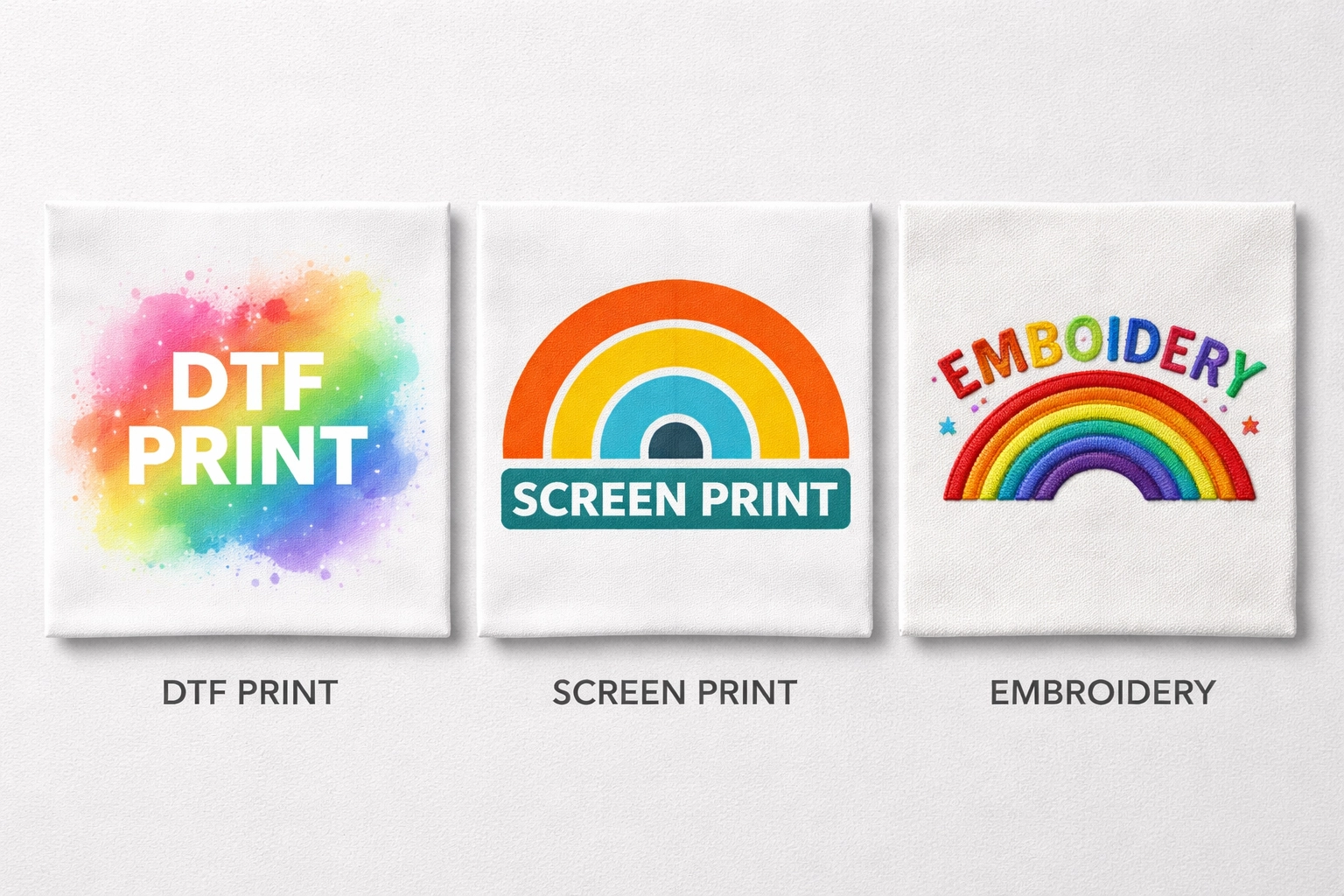
Screen printing pushes ink through a mesh screen directly onto your garment. Each color in your design requires a separate screen, which is why it works best for designs with fewer colors.
When Screen Printing Makes Sense
You're ordering 25+ pieces. The setup cost gets spread across each item, so the more you order, the cheaper each piece becomes.
Your design has 1–4 solid colors. Logos, text, and bold graphics look fantastic.
You want it to last. Screen-printed designs hold up through years of washing when done properly.
You're printing on cotton or cotton blends. This is where screen printing shines brightest.
When Screen Printing Doesn't Make Sense
You need 10 shirts with a photo-realistic image. The setup costs won't justify the order size, and the method isn't built for photographic detail.
Your design has gradients or dozens of colors. Each color adds cost and complexity.
You need different designs for each person. Screen printing is built for consistency, not customization.
Real-World Example
A school orders 200 spirit wear shirts with a two-color mascot logo. Screen printing is the obvious choice: low cost per shirt, durable print, and the bold colors pop on the fabric.
Get a Free Print Recommendation
Embroidery: The Professional Standard
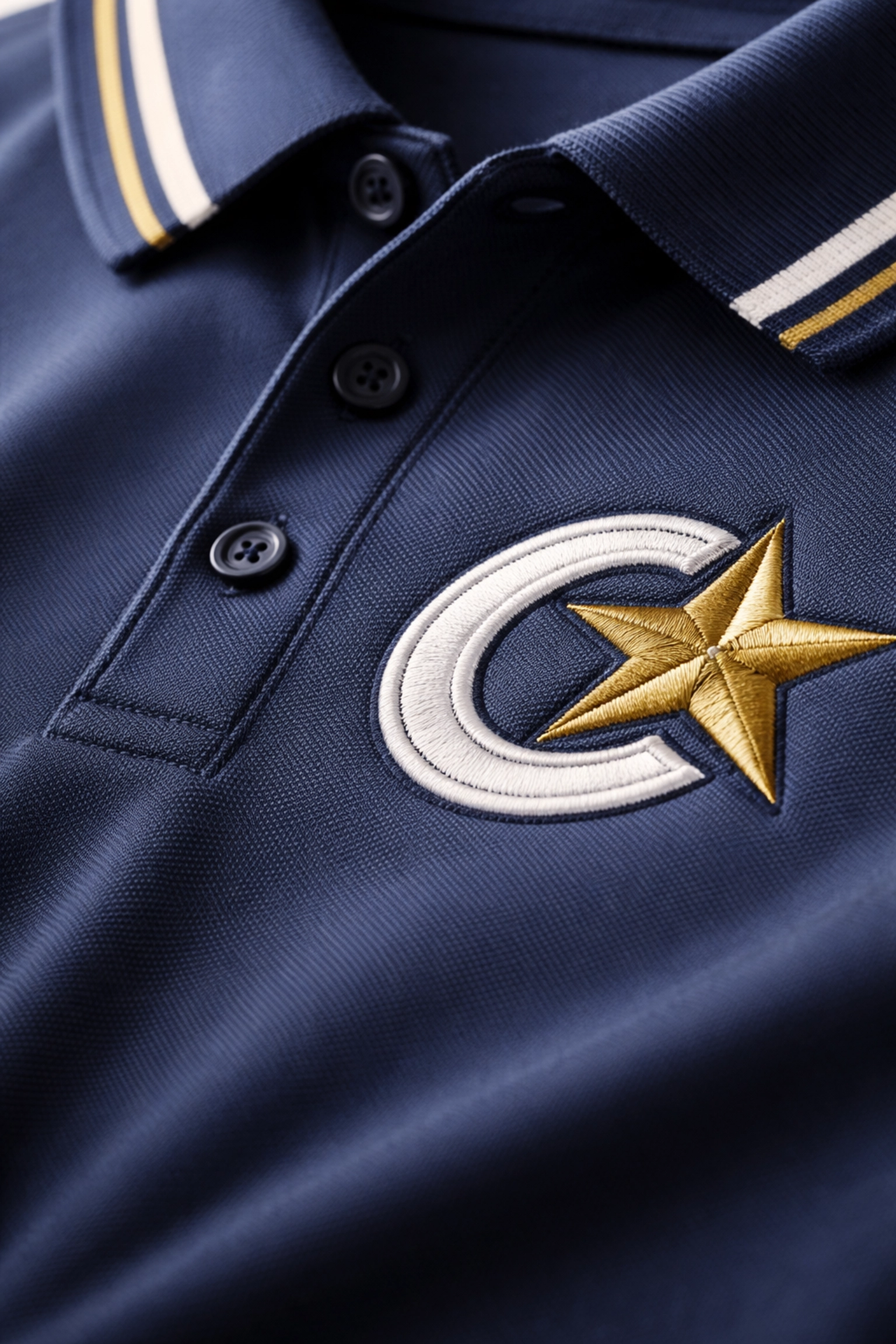
Embroidery stitches your design directly into the fabric using thread. It creates a textured, raised look that immediately signals quality.
When Embroidery Makes Sense
You're outfitting staff or leadership. Polos, button-downs, and jackets with embroidered logos look sharp and professional.
You need hats. Embroidery is the gold standard for caps: it holds up and looks right.
Durability is non-negotiable. Thread doesn't crack, peel, or fade like ink can. It's there for the life of the garment.
Your logo is relatively simple. Clean lines, text, and straightforward graphics translate beautifully.
When Embroidery Doesn't Make Sense
Your design is highly detailed. Fine lines, small text, and intricate artwork don't translate well to thread.
You're covering a large area. A full-chest embroidered design gets expensive fast: more stitches mean more time and cost.
You're on a tight budget for a large event. Embroidery costs more per piece than screen printing for most applications.
Real-World Example
A church orders 30 embroidered polos for their welcome team. The small chest logo looks clean, the shirts look professional, and the embroidery will still look sharp two years from now.
Get a Free Print Recommendation
DTF (Direct-to-Film): The Flexible Option
DTF is a newer method that prints your design onto a special film, which is then heat-pressed onto the garment. It's gained traction quickly because it handles complexity well and doesn't require the setup costs of screen printing.
When DTF Makes Sense
Your design has lots of colors, gradients, or photo-quality images. DTF handles full-color artwork without charging extra per color.
You're ordering smaller quantities. No screens to set up means lower startup costs. Ordering 12 shirts? DTF often makes more sense than screen printing.
You're printing on mixed fabrics. DTF works on cotton, polyester, blends, and performance fabrics where screen printing can struggle.
Each piece needs a different design. Name personalization, numbered jerseys, or individualized graphics are easier with DTF.
When DTF Doesn't Make Sense
You're ordering 100+ identical shirts. At high volumes, screen printing becomes more cost-effective.
You want the absolute softest hand feel. DTF prints have a slightly different texture than screen printing: still comfortable, but different.
Real-World Example
A small business orders 15 employee shirts, each with the company logo plus the employee's name. DTF handles the personalization easily without inflating the cost.
Get a Free Print Recommendation
How to Decide: A Practical Framework
Rather than memorizing the technical specs, ask yourself these questions:
How many pieces are you ordering?
Under 25: Lean toward DTF
25–50: Could go either way: depends on the design
50+: Screen printing usually wins on cost
How complex is your design?
Simple logo, 1–3 colors: Screen printing or embroidery
Full-color, gradients, photos: DTF
Clean text or monogram on a polo: Embroidery
What's the garment?
T-shirts, hoodies, tote bags: Screen printing or DTF
Polos, jackets, hats: Embroidery
Performance wear or polyester: DTF
What matters most: cost, durability, or appearance?
Lowest cost at scale: Screen printing
Maximum durability and premium look: Embroidery
Design flexibility and small-run affordability: DTF
Cost Comparison: What Actually Drives the Price
Understanding cost helps you avoid sticker shock.
Screen printing has higher setup costs but lower per-piece costs at volume. A 100-piece order might cost significantly less per shirt than a 20-piece order with the same design.
Embroidery is priced by stitch count. A small chest logo is affordable. A large back design with lots of detail gets expensive. The garment itself also tends to cost more (polos vs. t-shirts).
DTF has lower setup costs, making it economical for small orders. But it doesn't scale as efficiently: at 100+ pieces, screen printing usually beats it on price.
Durability: What Holds Up Over Time
All three methods are durable when done correctly. But there are differences:
Screen printing lasts for years with proper curing. Low-quality screen printing cracks and peels: that's a shop problem, not a method problem.
Embroidery is the most durable option. Thread doesn't fade, crack, or wash out. It'll outlast the garment.
DTF holds up well through regular washing. Quality has improved significantly as the technology has matured.
The biggest durability factor isn't the method: it's the shop doing the work. Cheap shops cut corners. Reliable shops don't.
A Note on Mixing Methods
You're not locked into one method per order. Many organizations use multiple methods strategically:
Screen-printed event shirts for the whole congregation
Embroidered polos for staff and leadership
DTF for the youth group's colorful, detailed design
The right shop will help you match the method to the purpose.
Making the Right Call
Here's the bottom line: there's no universally "best" method. There's only the best method for your specific project: your design, your quantity, your budget, your timeline, and how the apparel will be used.
We believe your apparel should represent you well—clean, durable, and made with care. That’s why we focus on recommending what actually fits your needs, not what’s easiest to sell.
If you're still not sure which direction makes sense, that's normal. This is our job, and we're glad to help you think through it.
We're always glad to answer questions early in the process. Reach out whenever you're ready( even if you're just exploring options.)
Get a Fast Quote

Comments